Choosing a warehouse roll up door is not simply a matter of measuring the opening.
The decision affects traffic flow, worker safety, energy use, and long-term maintenance. OSHA and NIOSH report that powered industrial trucks cause approximately 35,000 serious injuries annually in the United States. A poorly matched door can increase collision risks near busy loading bays. It can also create cold drafts, delays, and repeated repair costs.
Grand View Research identifies industrial doors as a growing market, driven by logistics, manufacturing, and warehouse expansion. That growth makes product claims easier to find, but not always easier to verify. Door speed, cycle rating, wind resistance, insulation, sensors, and emergency release systems deserve careful comparison. Real operating conditions matter more than attractive brochures.
As warehouse safety consultant David W. Smith says, “A door should support the workflow, not interrupt it.” That principle is useful, although it needs practical testing. A fast door may still fail when forklifts approach from poor angles. An insulated model may save energy, but its higher purchase price may not suit every facility.
This guide explains seven practical ways to choose a warehouse roll up door. It considers opening size, traffic volume, climate, safety controls, maintenance access, installation limits, and total ownership cost. The best answer may not be the most advanced model. Sometimes, it is the door that workers can operate safely every time.
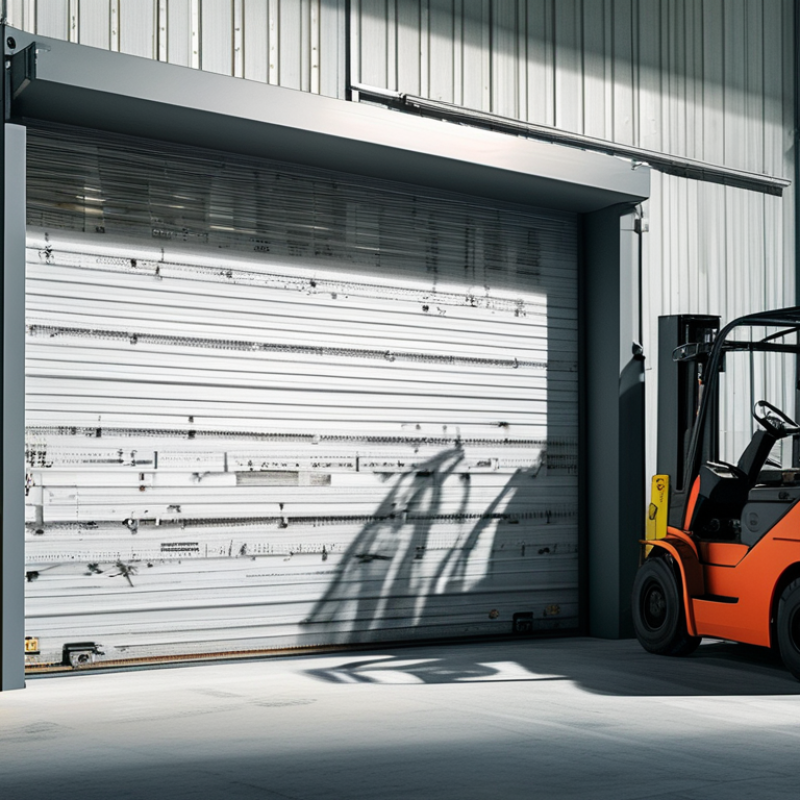
Warehouse roll-up doors serve different operational needs. Standard steel doors suit loading bays, maintenance rooms, and low-to-moderate traffic areas. Insulated doors help stabilize temperatures in climate-controlled warehouses. High-speed doors reduce open time between forklifts, people, and storage zones. Fire-rated rolling doors require approved assemblies and careful installation. They are not interchangeable.
Tip 1: Match the door to traffic volume, opening size, wind exposure, and temperature control. MHI’s 2024 Annual Industry Report found that 55% of respondents planned to increase supply-chain technology investment. That shift can increase door cycles near automated storage and retrieval equipment. Measure real traffic, not estimated traffic. The estimate is often wrong.
Tip 2: Check cycle ratings, safety sensors, vision panels, and maintenance access. Zebra Technologies’ 2023 Warehousing Vision Study reported that 73% of warehouse leaders planned to introduce automation by 2028. High-speed doors may support faster workflows, but only when controls communicate reliably with conveyors or vehicle systems.
Tip 3: Review the floor, guides, header clearance, and service conditions before selecting a model. A narrow clearance can force expensive redesigns. Insulation also deserves scrutiny; a thick panel cannot fix careless sealing around the perimeter.
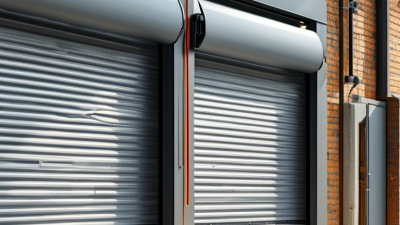
Choosing a warehouse roll up door starts with the opening, not the catalog. Measure width, height, headroom, side room, and floor level at several points. Tip one: record the smallest clear dimension. Tip two: allow space for guides, brackets, springs, and the operator. A few centimeters can change the design. Tip three: match door size to traffic. Oversized doors may waste energy and increase repair costs. Undersized doors create congestion and impact risks.
Material selection should follow exposure and operating demands. Tip four: use galvanized or coated steel where frequent contact, moisture, or heavy traffic is expected. Aluminum can reduce weight, but it may dent more easily. Insulated slats help moderate temperature changes. The U.S. Department of Energy’s 2018 Commercial Buildings Energy Consumption Survey identifies space heating as the largest commercial energy end use, at about 32 percent. Door leakage matters. Tip five: inspect bottom seals, side guides, and slat alignment, not only insulation values.
Structural checks are often missed. Tip six: verify jamb strength, lintel capacity, anchorage, and slab condition with a qualified engineer. Wind pressure depends on building height, location, and exposure. ASCE 7 provides the recognized basis for calculating these loads in the United States. Tip seven: specify cycle ratings, impact protection, emergency release, and maintenance access. Think beyond installation day. I have seen good doors fail early because the supporting steel was weak. The door was not the real problem. Recheck dimensions after racking, flooring, and dock equipment are installed. Belated checks are still better than none.
Assessing door size, material, and structural requirements
Planning examples: personnel access, pallet movement, forklift traffic, trailer access, and oversized equipment access. Actual requirements vary by facility and application.
Choosing a warehouse roll-up door starts with the opening, not the catalog. Measure width, height, traffic frequency, and exposure to wind-driven rain. Then compare seven practical details: panel insulation, thermal bridging, perimeter seals, bottom astragal, wind rating, operating speed, and controls.
R-value matters, but it is not the whole story. The U.S. Department of Energy’s 2018 Commercial Buildings Energy Consumption Survey found space heating represented 32% of commercial energy use. In a busy loading bay, every open cycle releases conditioned air. Insulated panels can reduce heat transfer. Fast closing and reliable seals limit infiltration. Ask for tested U-values, air-leakage results, and temperature conditions. ASHRAE Handbook—Fundamentals explains that infiltration changes with wind, pressure differences, and leakage area. Manufacturers sometimes emphasize R-value alone. That comparison can mislead.
Weather resistance needs site evidence. Check drainage, corrosion protection, hardware, and the tested wind-load class. For cold or humid facilities, inspect the bottom seal after installation, when floors are rarely perfectly level. Energy-saving controls should close doors quickly without disrupting safe traffic. Maintenance is part of efficiency. The U.S. Department of Energy’s Operations and Maintenance Best Practices report recommends preventive maintenance for sustained equipment performance. I would not accept a glossy efficiency promise. Request test methods, installation tolerances, and service intervals. A cheaper door may cost more when seals sag or cycles slow.
| Tip | Decision Dimension | Typical Performance or Data Point | What to Compare Before Buying | Why It Matters |
|---|---|---|---|---|
| 1 | Insulation Level | Uninsulated steel doors commonly have a U-factor above 5.0 W/m²·K. Insulated sectional or rolling doors are often approximately 0.5–2.5 W/m²·K, depending on construction and size. | Check the tested U-factor, panel thickness, core material, and whether the stated value applies to the complete door assembly rather than the panel alone. | A lower U-factor means less heat transfer, which can help stabilize indoor temperatures and reduce heating or cooling demand. |
| 2 | Weather Resistance | Look for continuous perimeter seals, a bottom seal, sealed guides, and a properly protected curtain or panel edge. Water and air performance should be supported by test results where available. | Ask how the door handles wind-driven rain, snow, dust, temperature changes, and uneven floors. Verify whether replacement seals are available. | Better sealing limits drafts, moisture intrusion, dirt, and pest entry while protecting stored goods and interior equipment. |
| 3 | Opening and Closing Speed | Conventional rolling steel doors often operate at roughly 0.15–0.30 m/s. High-speed doors may operate at approximately 0.6–2.0 m/s, depending on the design and safety system. | Compare opening speed, closing speed, duty cycle, motor rating, and the number of daily cycles expected at the loading point. | Faster operation reduces the time the opening is exposed, helping limit air exchange, temperature loss, and workflow interruptions. |
| 4 | Air Leakage Control | Air leakage depends on the door size, seals, guides, installation quality, and pressure difference. A complete assembly tested to a recognized air-infiltration standard provides more useful information than panel data alone. | Request the tested air-leakage rate, test pressure, door dimensions, and installation conditions. Inspect the fit around the jambs and floor. | Reducing uncontrolled airflow improves comfort, lowers HVAC loads, and helps prevent condensation caused by humid outdoor air entering a cooled space. |
| 5 | Energy Efficiency | Energy performance is affected by U-factor, air leakage, opening frequency, door size, indoor-outdoor temperature difference, and operating speed. There is no single energy rating that applies equally to every warehouse. | Estimate daily cycles and seasonal temperature differences. Compare the door’s thermal data with the cost of air infiltration and the required HVAC capacity. | A door selected for the actual operating pattern can reduce total operating cost more effectively than choosing insulation alone. |
| 6 | Wind, Impact, and Structural Performance | Wind-load ratings vary by door width, height, guide design, anchorage, and local building requirements. Impact-rated doors may include breakaway or self-resetting features. | Confirm the required wind pressure, pressure class, structural supports, impact protection, and safety sensors for the installation location. | Adequate structural performance helps prevent failures during severe weather, while impact recovery can reduce downtime in busy traffic areas. |
| 7 | Maintenance and Service Life | Springs, guides, rollers, hinges, bottom seals, safety devices, and motor components require periodic inspection. High-cycle applications generally need components designed for more frequent operation. | Compare recommended inspection intervals, component cycle ratings, cleaning requirements, emergency release features, spare-part availability, and service access. | Planned maintenance preserves sealing and safety performance, reduces unexpected downtime, and extends the useful life of the door system. |
Tip 1: Inspect safety features before comparing door prices. A reliable warehouse roll up door should include a bottom safety edge, photo-eye sensors, and an emergency stop. These controls help prevent contact with forklifts, workers, and stored materials. Test them during a site inspection, not only during a sales demonstration. Sensor placement can fail when dust, pallets, or poor lighting interfere.
Tip 2: Treat security as a daily operating concern. Look for strong slats, protected locking points, and controlled access options. The door should resist forced lifting and limit unauthorized entry after business hours. Check whether its curtain closes evenly across the floor. Small gaps may reveal alignment problems. Security is not only about heavy construction; visibility and staff routines matter too.
Tip 3: Match the operating mechanism to traffic volume. A high-cycle motor suits busy loading areas, while a manual chain hoist may work for occasional use. Consider opening speed, noise, power requirements, and emergency operation during outages. Keep clear maintenance records for springs, guides, brakes, and control switches. A fast door is not automatically a better door. I have seen specifications look impressive, yet the mechanism felt awkward in real workflow. Ask operators to test it with gloves, uneven loads, and limited visibility. Their feedback may expose weaknesses that a checklist misses.
Choosing a warehouse roll-up door requires more than checking its opening size. Plan around traffic volume, vehicle height, wind exposure, and daily opening cycles. A busy loading bay needs a stronger operating system than a quiet storage area. Measure the opening twice, including ceiling clearance and nearby lighting. Keep clearance generous.
Installation quality affects safety and long-term costs. Use a qualified installer who can verify wall strength, guides, springs, sensors, and emergency access. Ask for a written installation schedule and inspection record. Poor alignment may cause noise, scraping, or early component failure. These problems are expensive. Plan for them.
Maintenance should begin before the door is installed. Set monthly checks for tracks, rollers, fasteners, seals, and safety devices. Remove dust and packaging debris from the tracks. Train staff to report unusual vibration or slow movement immediately. Record repairs, parts, and service dates. Small neglect becomes expensive. Compare more than purchase prices. Include installation, electricity, cleaning, replacement parts, downtime, and future labor. An insulated door may reduce indoor temperature loss in climate-controlled spaces. However, it may not repay its higher cost in an unheated warehouse. Request itemized quotes and ask about expected service life, spare-part availability, and warranty terms. I once underestimated downtime during repairs. The door looked affordable, but delayed shipments cost more. Leave a realistic contingency for unexpected site work.

Since 1984, Thermostop has been a reputable manufacturer of Industrial Sectional Doors, Cold Storage Doors and Specialty Doors such as Impactable Breakaway doors, Acoustic Doors and Ballistic Doors.
Contact