China Best Garage Door Manufacturers and Suppliers?

Choosing China’s best garage door manufacturers and suppliers requires more than comparing prices or factory photographs. Buyers need evidence of material quality, testing, production experience, and after-sales support. Grand View Research’s Garage Doors Market Size, Share & Trends Analysis Report indicates steady global growth through 2030, driven by residential construction, replacement demand, and smart-home adoption. However, market estimates differ between research firms. That uncertainty deserves attention.

The International Door Association and DASMA emphasize professional installation, safety standards, and reliable maintenance. Tom Wadsworth, a technical director associated with DASMA, has repeatedly described the garage door as “the largest moving object in the home.” This simple statement carries practical weight. A heavy insulated panel, steel track, and automatic opener must work together every day. A supplier should therefore provide documented load ratings, cycle testing, corrosion protection, and clear warranty terms.

China has a deep manufacturing base, but factory scale alone proves little. The strongest suppliers can show audited production records, sample approvals, export experience, and responsive technical service. Buyers should inspect panel thickness, hinge design, spring specifications, sealing performance, and packaging before placing large orders. Requesting independent test reports is sensible. So is checking recent customer references.

Some supplier websites still present impressive claims without measurable evidence. That is a weakness in this industry. A careful comparison should separate verified performance from marketing language. This guide examines leading Chinese garage door manufacturers and suppliers through product capability, compliance, customization, delivery reliability, and long-term value. The best choice may not be the cheapest factory. It is the partner that can repeatedly deliver a safe, durable, and properly supported garage door.
China Best Garage Door Manufacturers and Suppliers?

Types of Garage Doors Manufactured in China

China manufactures several garage door types for homes, workshops, warehouses, and commercial buildings.

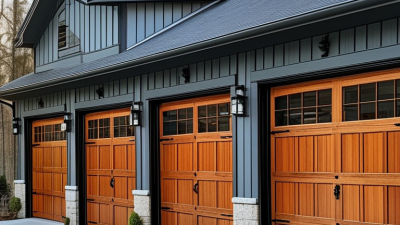
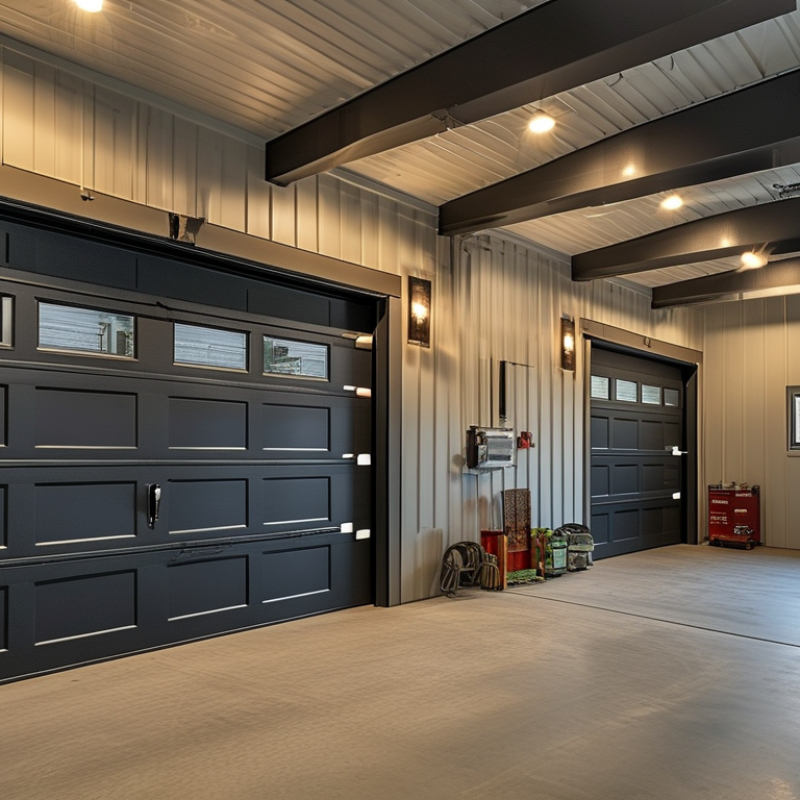
Sectional garage doors use hinged panels that travel along ceiling tracks. They suit insulated garages and limited driveway space. Panel cores may contain polyurethane foam, while steel skins improve strength and weather resistance.

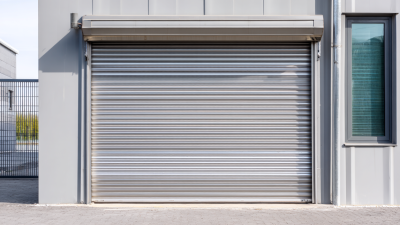
Roller shutter doors use compact slats that coil above the opening. They work well in narrow garages, storage units, and busy service areas.

Side-hinged doors open outward like traditional barn doors. They offer simple operation and easy pedestrian access, but require clear space outside.

Sliding garage doors can cover wider openings, although their side clearance needs careful planning.

Space matters.

Chinese factories also produce aluminum glass doors, full-view doors, and customized industrial doors.

Aluminum frames reduce weight, while tempered glass improves visibility in workshops and showrooms.

Full-view models look modern, but glass panels may need more careful cleaning and handling.

Details matter.

When comparing manufacturers, inspect panel thickness, hinge design, track alignment, spring cycles, motor compatibility, and corrosion protection.

Request drawings, load data, sample finishes, and installation instructions before placing a large order.

Factory quality checks should include repeated opening tests, insulation inspection, coating adhesion, and safety reversal testing.

A low quotation can hide thinner steel or weaker hardware. Not every specification is easy to verify, and that is where buyers often need better evidence. Door performance also depends on accurate site measurements and competent installation.
Key Criteria for Choosing a Reliable Chinese Manufacturer

China Best Garage Door Manufacturers and Suppliers?

Key Criteria for Choosing a Reliable Chinese Manufacturer

The global garage door market was valued at approximately US$7 billion in 2023, according to Grand View Research’s 2024 industry analysis. This growth attracts many Chinese manufacturers, but a low quotation does not prove reliability. Buyers should examine factory experience, production capacity, and documented quality controls. Ask for recent project references, not only polished catalog images.

A dependable supplier should provide material specifications, dimensional drawings, and batch inspection records. Check steel thickness, coating performance, insulation values, spring-cycle testing, and motor compatibility. ISO 9001 certification is useful, but it does not guarantee every door is well made. Independent testing against the destination market’s safety and performance requirements is more convincing. Request test dates and laboratory details. Small evidence matters.

The International Energy Agency reports that buildings account for roughly 30% of global energy demand, making insulated garage doors increasingly relevant. Compare U-values, panel density, sealing design, and reported test methods. Also review packaging, spare-part availability, warranty response time, and production lead times. A factory audit should include welding areas, coating lines, storage conditions, and final inspection stations. Do not rely on one video call. It can hide weak processes. No checklist is perfect. I would still require a pilot order, because real installation often reveals alignment, noise, or sealing problems that documents miss.

Leading Garage Door Manufacturing Regions in China

China’s garage door industry is concentrated in several manufacturing regions, each with different strengths. Zhejiang is known for metal processing, hardware supply, and export-oriented factories. Ningbo and nearby cities often support sectional doors, rolling doors, springs, tracks, and electric operators. Guangdong focuses on automation, aluminum profiles, and customized residential systems. Foshan and Dongguan provide access to mature machining and electronics supply chains.

Jiangsu offers strong engineering capabilities and organized industrial parks. Suppliers around Suzhou and Wuxi commonly produce insulated panels, steel components, and commercial door systems. Shandong also deserves attention for larger workshops, agricultural buildings, and industrial applications. Regional advantages are useful, but they do not guarantee quality. That assumption is too simple.

A reliable buyer should inspect production details, not only the factory address. Check panel thickness, foam density, welding quality, coating consistency, and spring-cycle testing. Ask for drawings, installation instructions, load data, and documented quality records.

Suppliers near major ports may reduce transport time, but inland factories can offer competitive fabrication costs. In practice, a low quotation can hide weaker hardware or limited after-sales support. Factory audits and sample testing remain essential. Mistakes happen when buyers compare prices before defining performance requirements.

Quality Standards, Certifications, and Customization Options

When evaluating China’s garage door manufacturers and suppliers, quality begins with traceable production. A reliable factory should document steel thickness, insulation density, spring cycles, and surface coating performance. These records reveal more than polished product photos. Ask for batch numbers and test reports.

Relevant certifications depend on the destination market and door design. ISO 9001 indicates a controlled quality management system, while product-specific approvals may support regional safety requirements. CE marking can apply to certain markets and configurations, but it should never be accepted without verification. Request current certificates, testing laboratories, and matching model numbers. Independent inspections can confirm dimensions, weld quality, motor protection, and emergency release performance. Small gaps matter.

Customization is useful when it solves a real installation problem. Suppliers may adjust panel colors, window layouts, track dimensions, opening sizes, control systems, and insulation levels. Experienced engineers should provide shop drawings before production. Confirm wind-load assumptions, available headroom, voltage, drainage, and replacement-part access. A custom design may look excellent yet fail on site if measurements are incomplete. That risk is often underestimated.

Some suppliers respond quickly but provide vague tolerances. Treat that as a warning. Clear contracts should define materials, inspection points, packaging, warranty coverage, and delivery responsibilities. Factory visits, sample testing, and pre-shipment checks add practical confidence. No certification replaces careful verification.

How to Evaluate Suppliers, Pricing, and Export Services

Choosing a Chinese garage door supplier requires more than comparing factory photos. Grand View Research’s 2024 market analysis projects the global garage door sector to expand at roughly 5% annually through 2030. That growth attracts capable factories, but also rushed quotations. Ask for drawings, steel grade, panel thickness, cycle testing, and installation limits. A low price means little if the door needs replacement hardware after one winter. I have seen buyers overlook packaging until damaged corners reached the jobsite. That mistake is expensive.

Build a landed-cost sheet. Include door panels, springs, tracks, motors, tooling, inspection, inland freight, ocean freight, insurance, duties, and spare parts. Request a price basis such as FOB or CIF, and record currency and validity dates. UNCTAD’s Review of Maritime Transport reports that ships carry over 80% of world merchandise trade by volume. Freight volatility can erase a small factory discount. Ask whether the supplier can consolidate cartons, provide container-loading photos, and issue accurate commercial documents.

Export service deserves measurable evidence. Check production lead time, response time, warranty terms, and complaint records. The World Bank’s 2023 Logistics Performance Index evaluates customs, infrastructure, shipment reliability, and timeliness. Use those same categories during supplier audits. Confirm CE, UKCA, or local requirements only when your destination needs them. Request test reports from recognized laboratories, not edited screenshots. One uncomfortable question remains: can the factory support your market five years later? A polished sample cannot answer it. Independent pre-shipment inspection helps, although it adds cost and may still miss installation errors.