What is a Door Hinge and How to Choose the Right One?
When it comes to home improvement, the often-overlooked Door Hinge plays a vital role. A door hinge is a mechanical device that connects a door to its frame, allowing it to swing open and closed. Choosing the right door hinge is crucial for functionality, aesthetics, and durability. Selecting a hinge can seem straightforward but requires knowing various types and materials.
Different doors have different needs. A heavy wooden door requires a sturdy hinge, while a lightweight interior door might only need a simple design. The wrong choice can lead to issues like misalignment or the door sagging over time. Research is essential. Understanding the specifications and load ratings can significantly affect the door's performance.
The market is filled with options, each claiming superiority. However, not all hinges meet quality standards. It's important to rely on trusted brands and reviews. In this guide, we'll explore what a door hinge is, the types available, and how to choose the right one. Making an informed decision ensures that your doors work seamlessly and look great.
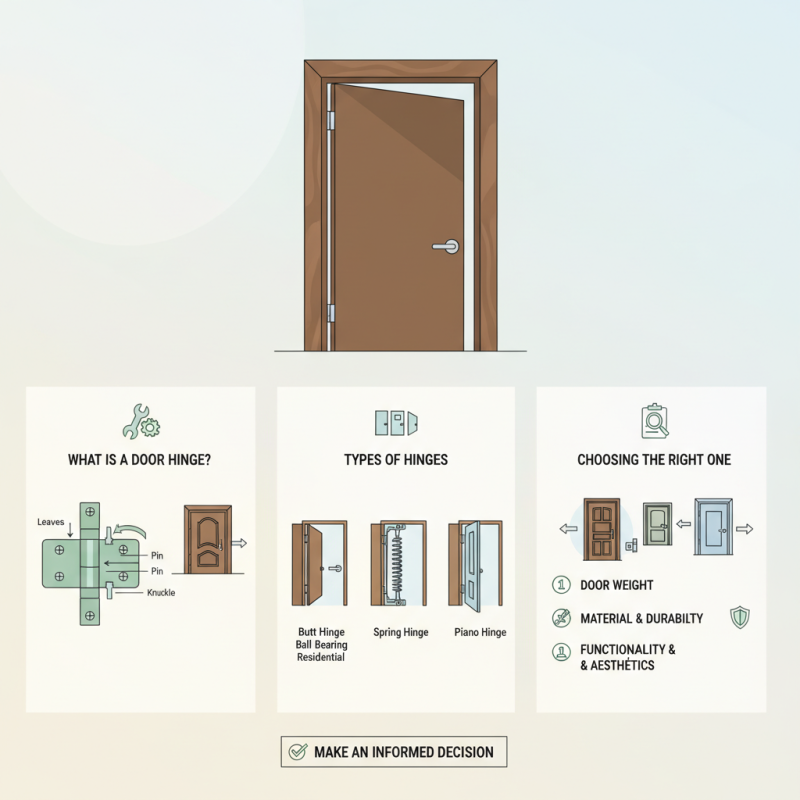
What is a Door Hinge? Understanding Its Function and Types
A door hinge is a simple yet crucial component of any door. Its primary function is to enable smooth opening and closing. Hinge types vary significantly, including butt, continuous, and pivot hinges. Each type suits different door styles and weights, impacting functionality and aesthetics.
Understanding the material is essential. Most hinges are made of steel, brass, or stainless steel. According to industry data, steel hinges dominate the market due to their strength and durability. Brass hinges offer a stylish look but may corrode over time. Stainless steel is corrosion-resistant, making it ideal for humid environments. Choosing the right material enhances the door's longevity.
Installation is critical. Misaligned hinges can cause operational issues. An estimated 20% of homeowners report door sticking problems due to poor installation. Evaluating the door's weight and frequency of use helps in selecting the appropriate hinge type. A lightweight door may not require heavy-duty hinges, while a heavy door might need extra support. Taking time to analyze these factors can lead to better functionality and a longer lifespan of the door system.
What is a Door Hinge and How to Choose the Right One?
| Hinge Type | Material | Weight Capacity | Common Uses |
| Butt Hinge | Steel | Up to 300 lbs | Interior doors |
| Piano Hinge | Stainless Steel | Up to 500 lbs | Piano lids, long doors |
| Continuous Hinge | Aluminum | Varies by design | Heavy duty applications |
| Spring Hinge | Brass | Up to 120 lbs | Self-closing doors |
| Hidden Hinge | Steel or Brass | Up to 250 lbs | Cabinet doors |
The Different Types of Door Hinges: A Comprehensive Overview
When selecting the right door hinge, understanding the various types available is crucial. Door hinges come in several styles, each designed for different functions. For example, butt hinges are common for interior doors, providing strength and stability. According to industry reports, approximately 80% of residential doors utilize this type of hinge due to its reliability.
Piano hinges, often used in piano lids and long doors, span the full length of the door. This design distributes weight evenly and prevents warping. In commercial applications, continuous hinges show a significant rise in usage, with studies indicating a 25% increase over the past three years. These hinges reduce the load on door frames, prolonging their lifespan.
It’s important to consider material when choosing a hinge. Stainless steel is a popular choice for its durability and resistance to rust. However, many homeowners still opt for brass hinges due to their aesthetic appeal. This choice often lacks functionality in high-moisture areas. A balance between form and function is necessary, highlighting the importance of making informed decisions.
Key Factors to Consider When Selecting Door Hinges for Your Project
When choosing door hinges, several key factors warrant your attention. First, consider the door weight. Heavier doors require robust hinges. If the hinge cannot support the weight, it may fail. This leads to costly repairs.
Next, look at the hinge material. Stainless steel offers durability and resistance to rust. Brass is a classic choice but may tarnish over time. Choosing the right material can enhance both function and aesthetics.
Lastly, pay attention to the hinge size and type. A common mistake is to overlook hinge size. Ensure the hinge fits the door and frame properly. It affects performance and longevity. Think about the hinge's finish, too. A poor finish may wear off, leading to disappointment. Evaluating these aspects carefully can prevent future headaches.
Industry Standards: Material Durability and Load Capacity of Hinges
Choosing the right door hinge requires attention to industry standards. Two critical factors are material durability and load capacity. The material determines how long the hinge will last under stress. Common materials include stainless steel, brass, and plastic.
Stainless steel offers rust resistance, making it ideal for outdoor use. Brass may provide a classic look but can wear out faster. Plastic hinges serve lighter purposes, but they typically lack the strength for heavy doors.
Load capacity is another essential consideration. It defines how much weight a hinge can support. For instance, residential doors usually weigh between 30 to 50 pounds. A hinge rated for at least 80 pounds is wise for added durability. If the hinge is under-designed for the door size, it can cause misalignment. This is often an overlooked detail but can lead to significant issues over time.
Inspecting weight limits isn't always straightforward. Frequently, the packaging may not specify exact capacity. In these cases, consulting industry guidelines becomes essential. It’s crucial to assess your specific door’s weight and use case. Without this, you might end up with a hinge that fails after a brief period. Balancing durability and load capacity can prevent future frustrations.
Tips for Proper Installation and Maintenance of Door Hinges
Proper installation and maintenance of door hinges are crucial for their longevity and functionality. Start by ensuring you have the right tools. A drill and a screwdriver will be your best friends. Use a level to check that the hinge is aligned correctly. An improperly aligned hinge can lead to door sagging or sticking. Take your time and double-check each step during installation.
Cleaning your door hinges is important for smooth operation. Dust and debris can accumulate, causing friction. Wipe them down with a cloth regularly. If you notice squeaking, apply a silicone-based lubricant. It minimizes residue buildup compared to traditional oils. However, don’t overdo it; too much lubricant can attract more dirt.
Reflect on your choice of hinge material. Exterior doors should feature rust-resistant options. Consider the climate; moisture can deteriorate metal. If the hinge shows signs of wear, don’t hesitate to replace it. Ignoring this can lead to more extensive repairs later. Taking these small steps ensures that your door hinges serve you well for years to come.
Door Hinge Material Comparison